
The former liberal European Parliament president from Ireland reflects on the promise of enlargement, the lessons of the past and why Europe must find the courage to open its doors to Ukraine.
There is an old Irish story about people climbing into a round tower, gathering its treasure and pulling the ladder up behind them. Once the ladder was gone, no one else could enter. When Pat Cox campaigned for Ireland’s second referendum on the Nice Treaty in 2002, he borrowed this story to make a case for enlargement.
Ireland had once been among the poorest EU members but integration transformed its prospects. So, Cox asks, why should a country that had benefited so profoundly from the European project deny others the same opportunity?
More than two decades later, as the EU considers its next enlargement and Ukraine’s path towards membership, he returns to the image.
“This tower has been a very privileged place for us, we have done very well and gained a lot of prosperity – we shouldn’t pull up the ladder as others need to climb into this space. We have got to be generous enough to do it.”
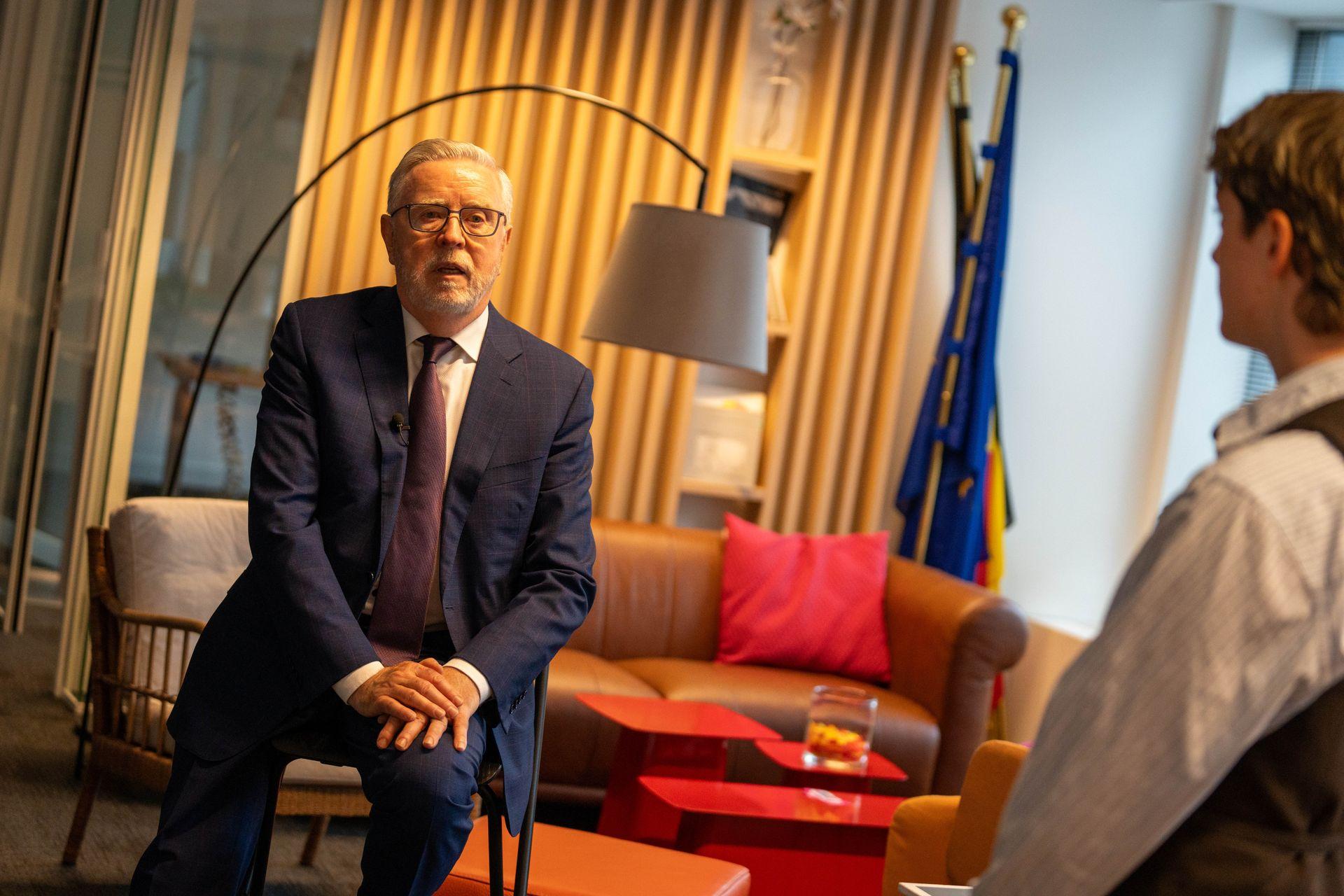
Cox, who also served as president of the European Liberal Democrat and Reform Party (ELDR) 1998-2002, knows that opening the door is only the beginning. The Union must also be ready to accommodate those who come through it.
Before enlarging to Ukraine, Cox says it is vital that “the EU spends more time accommodating its future enlargement.” He argues for more efficient decision-making, including “where possible to switch things to majority votes under the Lisbon Treaty,” alongside careful consideration of the budgetary challenges. He also calls for an acceleration of Ukraine’s delivery of the Kachka-Kos Plan, a ten-point reform programme.
The case for enlargement is not new for Cox. He played an instrumental role in the historic 2004 ‘Big Bang’ enlargement and believes Europe should not underestimate the scale of what it achieved. “I think we must explain to the public that enlargement has been one of the powerful successes of European public policy.”
For Cox, European integration can facilitate huge change, enabling opportunities for all. “Enlargement has made every state that joined richer than before because of greater opportunity and every member state that pre-existed richer as well. When you have a win-win formula, don’t be afraid of rolling it out for the future.”
But he also warns against repeating the past without learning from it. The experience of democratic backsliding in Hungary and Poland, he says, has exposed the need for stronger safeguards and shown that no member state is immune.
“We must protect core values, and protecting them requires guard rails, which require teeth to work. This is an opportunity for everyone, not just for states coming in. Backsliding can happen any place, any time depending on electoral outcomes.”
Enlargement is therefore both an opportunity and a test of the Union’s own resilience. Cox does not believe that countries should be expected to join against their will. Iceland’s decision to reject the resumption of EU membership negotiations, he says, was a sovereign choice.
“It is not an old, imperial Europe. We are now an entity where sovereign people make free and sovereignty choices to join. The essence of the EU is that it is a voluntary Union. You’re in because you choose, you’re out because you choose.”
Yet while membership must remain voluntary, Cox is clear that the geopolitical stakes of enlargement have changed. Europe’s failure to maintain focus has allowed Russian influence to grow, particularly in the Western Balkans. The war in Ukraine has only sharpened that lesson.
But making the case for enlargement will require more than geopolitics. It will require political conviction and a willingness to meet voters where they are. Ahead of the 2029 European elections, Cox argues that liberals cannot retreat from their convictions simply because populism and protectionism are on the rise.
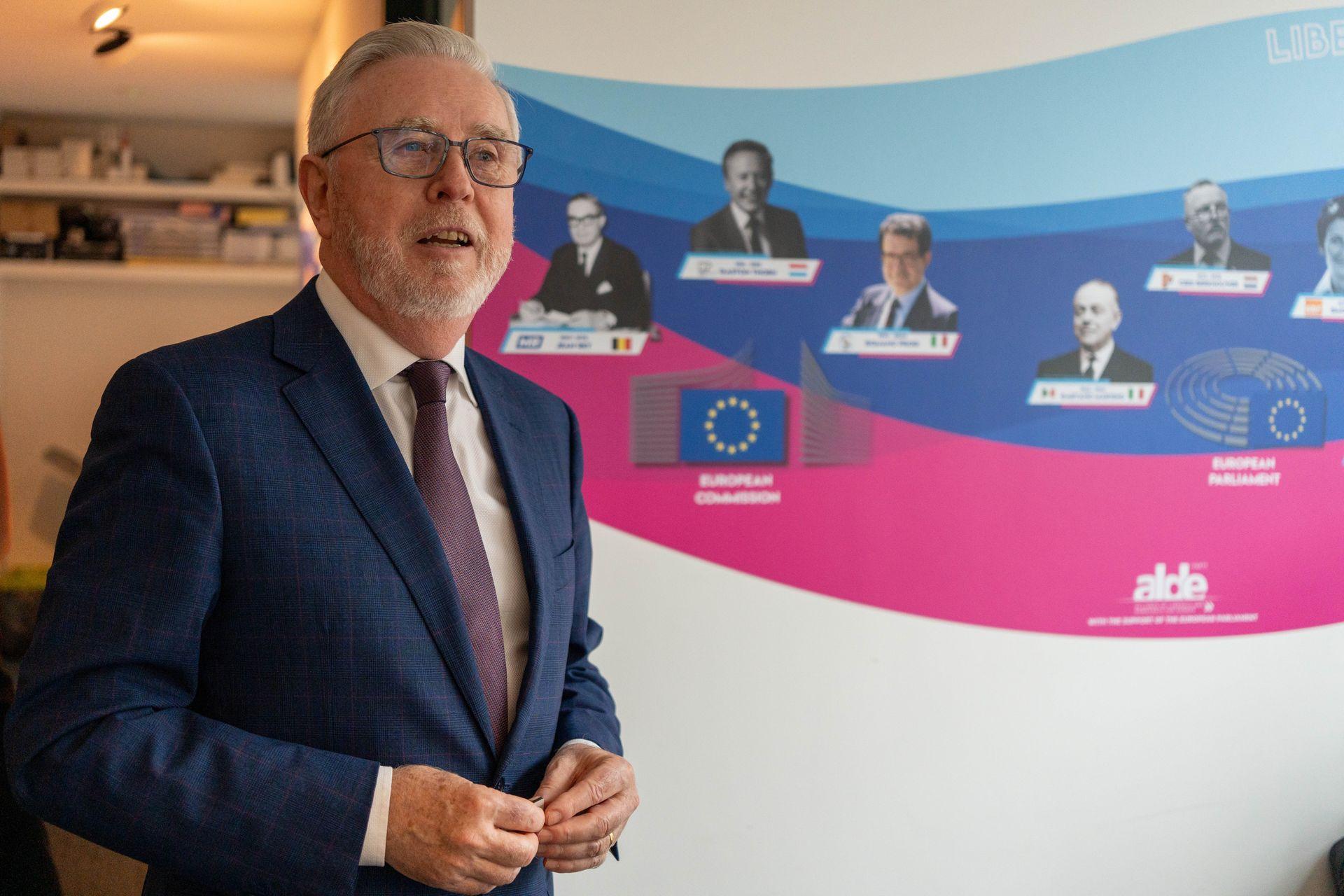
“You can’t be afraid of what you believe in and if you stand for everything you stand for nothing.”
He believes conventional parties can learn from populist movements’ ability to reach younger voters and those who have stayed away from elections, without adopting their values.
“Let’s learn from what they do that can be successfully exploited without having to follow them down a road to backwardness.”
For Cox, that means getting closer to people. His experience campaigning for the Nice Treaty taught him that public opinion is rarely shaped by institutional arguments alone. In Ireland, religious fundamentalists, taxi drivers and farmers brought entirely different grievances to the referendum. Together, they helped produce a no vote.
“I think that campaigning on the ground is indispensable,” he says, recalling how he took five or six weeks off as President of the European Parliament to campaign on the streets: “I asked the first Vice-President to take my place. I abandoned staff. I hired a big bus, I filled it every day and I spent every day campaigning.”
“Most people you will find possess decency, but you have to find some way to unlock it.” The key, he believes, is storytelling. “We don’t tell enough stories, we get lost in complexity of regulation, but if you don’t have narrative it is very difficult to convince people who are not inside the bubble.”
Few stories capture the human meaning of enlargement better than that of Bronisław Geremek, the Polish scholar and later liberal MEP. Geremek repeatedly offered his intellect to the trade union movement at the Gdańsk shipyard, and was imprisoned for it. Each time he was released, he returned.
“These are extraordinary people, they have already fought for values they believe in and they have gone to prison for positive values. Sometimes I felt we weren’t fit to tie their shoelaces, so of course they should be in the Union.”
It is a reminder that enlargement is not only about whether countries are ready to join. It is also about the people who have fought and sacrificed for the freedoms and values the Union represents.
Europe’s prosperity was never meant to be a treasure locked inside a tower. Ireland knows what that ladder can mean. Now Ukraine and others are asking for the same opportunity, with their own sacrifices and hopes for a better future.
The EU must prepare its institutions and protect its values. But the real test of enlargement will be whether Europe is willing to extend to others the opportunity that transformed its own fortunes. The ladder is there. The question now is whether Europe has the political courage to keep it down.
Watch the full interview below.