
From 1 July, Ireland will take over the presidency of the Council of the EU for the first time since 2013. In a year marked by geopolitical instability and rapid political change, it is being viewed as a genuinely generational moment for the Union.
To mark the occasion, ALDE Party hosted a Liberal Breakfast in Brussels, where Minister for European Affairs Thomas Byrne outlined the priorities that will define Ireland’s six-month term and the desire to leverage its experience in multilateral cooperation.
This marks the first Council presidency where our member Fianna Fáil is the main party in the Irish government while being a member of ALDE Party. With the party marking its centenary year, it will be keen to make an impact similar to past presidencies.
Given current global unpredictability, the upcoming presidency can be compared to Ireland’s presidency in 1989 when it brokered the reunification of Germany at a summit in Dublin. Similar vigour will be needed to navigate complex challenges such as transatlantic relations, enlargement and democratic backsliding.
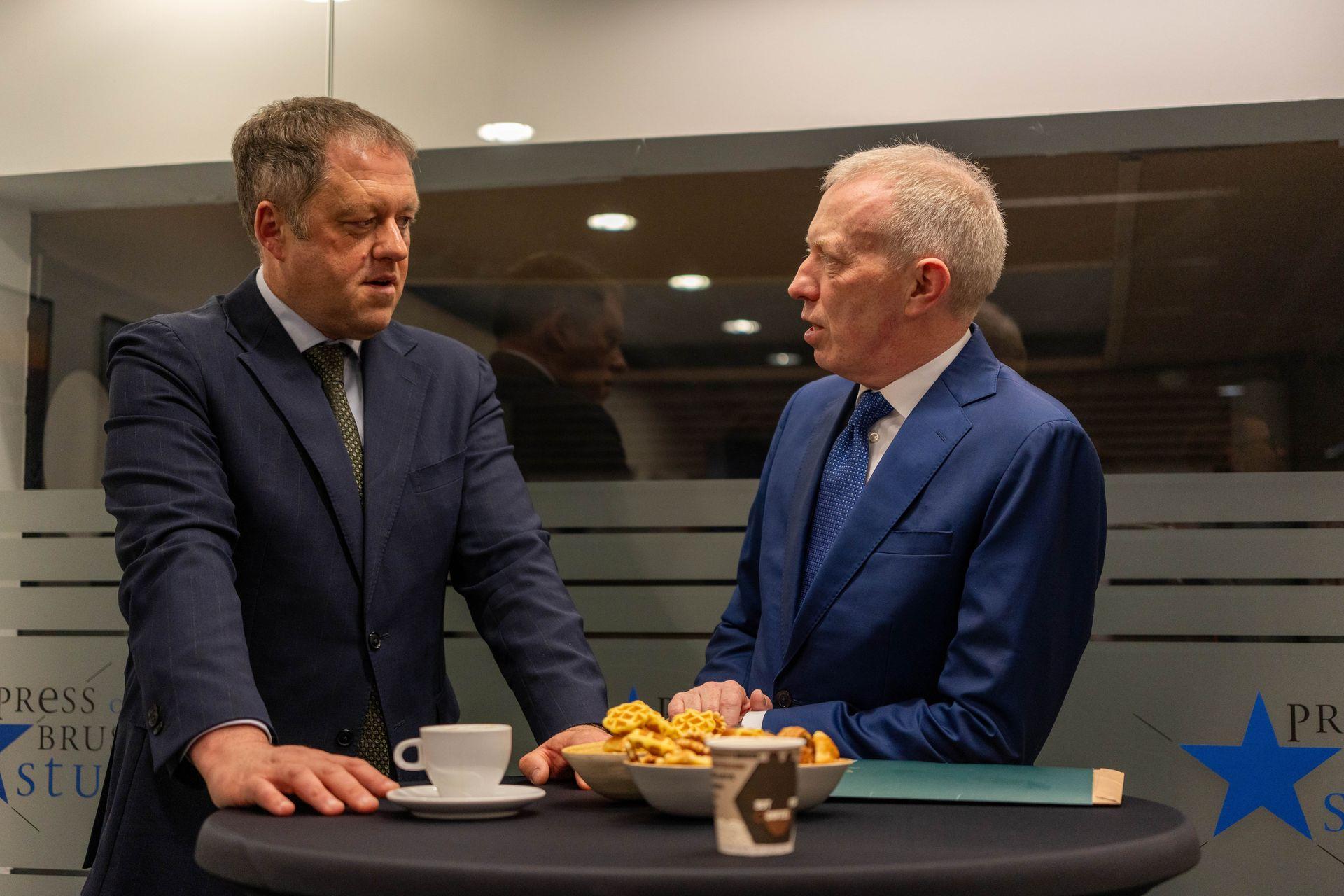
Byrne outlined three main priorities for the Irish presidency:
The first priority was European competitiveness, with the goal of creating achievable deadlines and regulation methods to mitigate the EU’s over-bureaucratic nature. This will also feed into discussions on the Multiannual Financial Framework, a key domestic priority for Ireland as one of the EU’s highest per-capita contributors.
Speaking to a room of senior liberal figures over breakfast in Brussels, he said: “we can all be a part of this generational moment, but some compromise is required to drop some red lines and make Europe truly competitive.”
The Irish minister then highlighted enlargement as the second focus, with a hope to advance current negotiations in a similar vein shown during the 2004 presidency when Ireland played a key role in pushing the negotiations forward for ten countries to join the EU, as well preparation work Croatia's accession in 2013.
Byrne set a target on finalising Montenegro’s accession negotiations by the end of the presidency in order to give “political impulse to the process” and create a “snowball effect” on Albania, Ukraine and Moldova, who are all in the running for future membership – as well as Iceland who will host a referendum on EU membership in August.
The final priority was framed around security and defence: from cyber and maritime security and the disinformation space to closer cooperation for defence industrial policy and support for partners such as Ukraine. Byrne highlighted the preservation of European values as critical in this defence infrastructure amid a rising wave of hate.
In the current splintering rules-based order, it was made clear that despite the merits of diversification and creating new trade deals, a stable relationship with the US would remain pivotal during the Irish presidency.
ALDE Party’s Liberal Breakfast provided a first clear look at the priorities that will define the Irish Council presidency. The discussion captured a broader sense that the coming six months will be a defining test of Europe’s ability not just to manage uncertainty, but to shape what comes next.