
From Ukraine's future in Europe to the growing influence of algorithms on democracy, day two of the ALDE Party Congress 2026 focused on the defining challenges facing the European Union. The audience heard from some of our top leaders:
- Kristen Michal, Prime Minister of Estonia (Eesti Reformierakond, EE)
- Thomas Byrne, Minister of State for European Affairs & Defence (Fianna Fáil, IE)
- Oana Țoiu, Minister of Foreign Affairs (USR, RO)
- Oleksandr Korniyenko MP, Deputy Chair of Parliament and party leader (Servant of the People, UA)
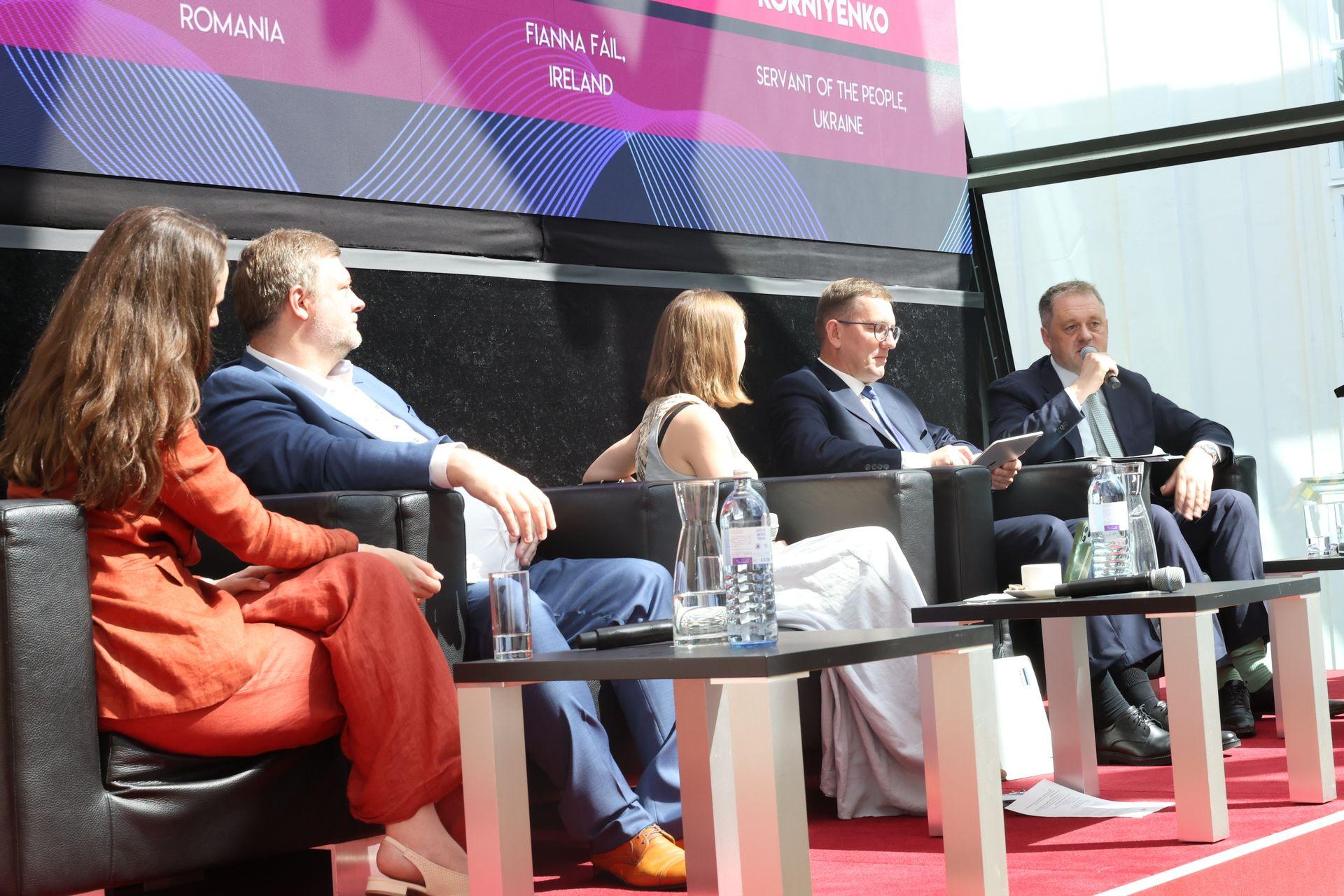
A central theme was continued support for Ukraine, with speakers stressing that enlargement and European security go hand in hand. As Prime Minister Michal argued:
"This is not charity, it is also in Europe's interest. A larger Europe is a stronger Europe."
Looking towards future EU enlargement, Minister Țoiu highlighted the importance of strengthening Europe's digital resilience:
"We have seen Russia use energy as a weapon of war in Ukraine and Moldova in an attempt to destroy democracy," she said.
The debate, moderated by Anna Stürgkh (NEOS, AT), ultimately centred on strengthening Europe's competitiveness, defending democratic values and enhancing collective security in the face of growing geopolitical threats.
Attention then turned to the digital sphere during the second panel discussion, Freedom Talks: The future of democracy in the age of algorithms, which explored how algorithm-driven platforms are reshaping political discourse. Speakers included:
- Anders Adlercreutz, Minister of Education of Finland, SFP Party Leader
- Josephine Ballon, CEO, HateAid
- Garry Kasparov, Writer and Member of the PACE Platform for Dialogue with Russian Democratic Forces
- Anett Numa, Chief of International Affairs, NEVERHACK
From media literacy to algorithmic transparency, panellists warned that social media platforms are increasingly being exploited by authoritarian actors and the far right to undermine democratic values and sow division.
Kasparov argued that this trend is not new but a well established tactic:
"We are at war. We have been for a long time, with 20 years of open attacks. Technology being used by authoritarian states to promote their agenda is not new. Look at Hitler and Goebbels' use of radio."
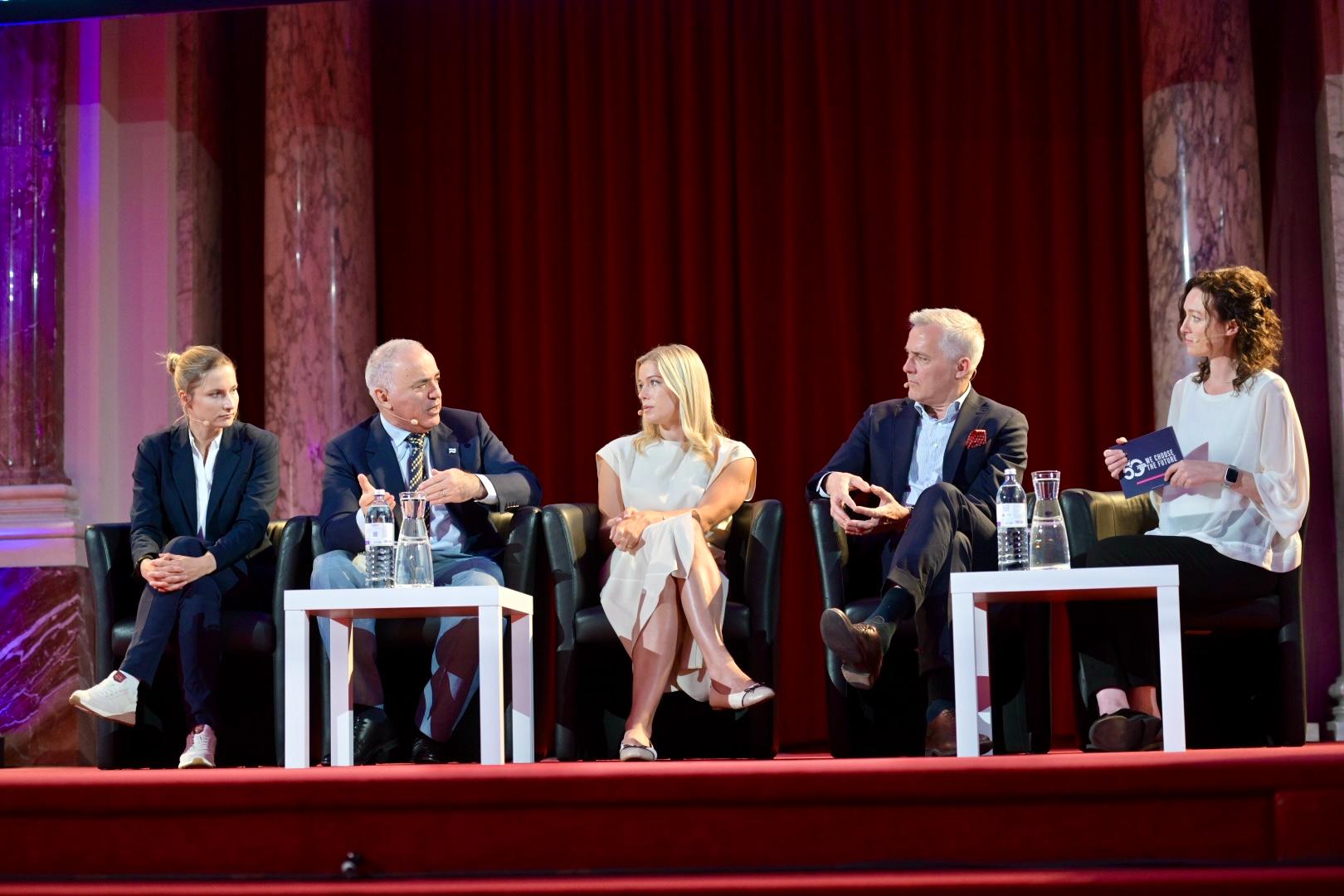
The panel also debated whether restricting young people's access to social media is an effective response. While opinions differed, several speakers maintained that education is a more sustainable solution than outright bans.
"We are preparing the next generation to manage the age of the internet. Banning them is not the solution; we must educate them so that they are ready," Numa said.
The discussion concluded that social media companies are unlikely to regulate themselves voluntarily, reinforcing the need for robust enforcement of the EU's Digital Services Act against major technology platforms such as X.
Minister Adlercreutz also cautioned against striking the wrong balance between regulation and innovation:
"It is essential that we can regulate this market without shooting ourselves in the foot in the name of European competitiveness, which is also part of that discussion," he said.
Together, the two debates underscored a common message: Europe's future depends not only on its ability to strengthen security and support its neighbours, but also on its capacity to defend liberal democracy in an increasingly digital world.